

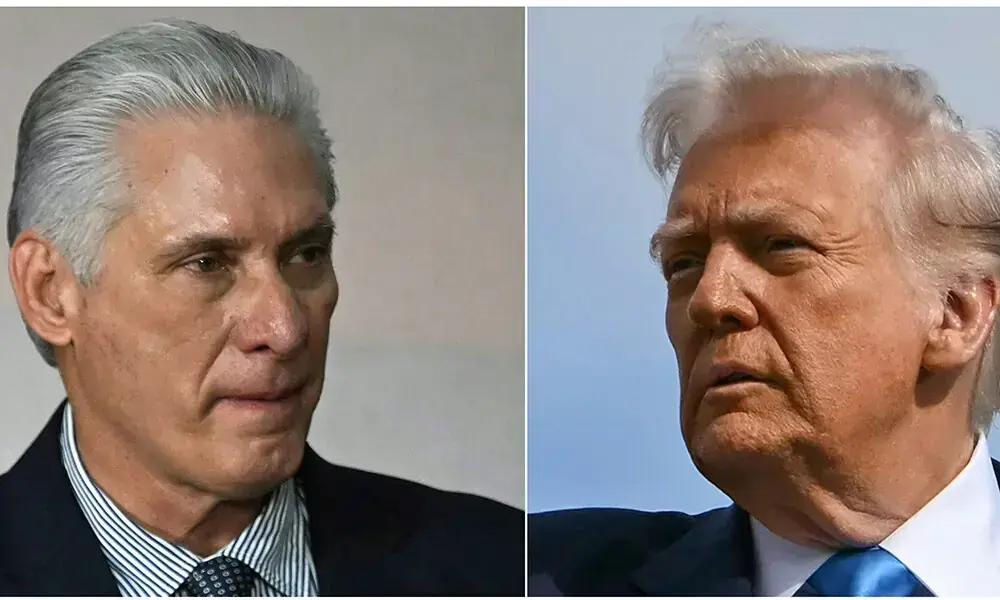
Cuba has firmly stated that its political system and the presidential term are not open for negotiation with the United States. This declaration came in response to reports suggesting Washington sought to influence the leadership of President Miguel Diaz-Canel. Deputy Foreign Minister Carlos Fernandez de Cossio emphasized that neither Cuba’s political structure nor the tenure of any official is subject to discussion with the U.S. The island nation recently confirmed engaging in talks with the U.S. government amidst an escalating economic crisis, partly fueled by an oil blockade. President Diaz-Canel has adopted a more resolute stance, preparing the nation for potential U.S. aggression.
The Cuban Deputy Foreign Minister’s strong repudiation followed media disclosures, including those from USA Today and The New York Times. These reports indicated the Trump administration was exploring an economic agreement that might include conditions for President Diaz-Canel’s departure. The proposed deal, according to sources, would have altered trade restrictions but also provided an exit strategy for the Cuban president. Such terms explicitly aimed to remove current leadership while leaving the influential Castro family lineage unaffected.
President Diaz-Canel himself reinforced the defiant tone, addressing a group of foreign activists by stating Cuba was bracing for potential U.S. actions. He publicly declared that the island would not stand idly by if faced with aggression from external forces. Earlier this week, he conveyed a similar message on social media, vowing strong resistance against any aggressor. These statements underscore Cuba’s readiness to defend its sovereignty and established political order against perceived external pressures.
The U.S. proposals reportedly mirrored strategies employed previously, such as the situation in Venezuela where President Nicolas Maduro was removed. The U.S. subsequently collaborated with an acting head of state rather than installing a full opposition government. This approach suggests a pattern of intervention aimed at reshaping leadership in nations deemed adversarial. Cuba’s leadership, widely distributed among senior Communist Party officials, presents a complex governance structure distinct from a singular presidential figurehead.
Cuba’s unwavering stance highlights a fundamental disagreement over national sovereignty and internal political affairs. The nation maintains its right to self-determination, rejecting external interference in its leadership choices and governance model. As discussions continue, Cuba appears committed to safeguarding its political system and the legitimacy of its elected officials. The ongoing dialogue, therefore, is expected to navigate this significant divergence in diplomatic expectations.
Comments (0)
No comments yet. Be the first to comment!
Leave a Comment