

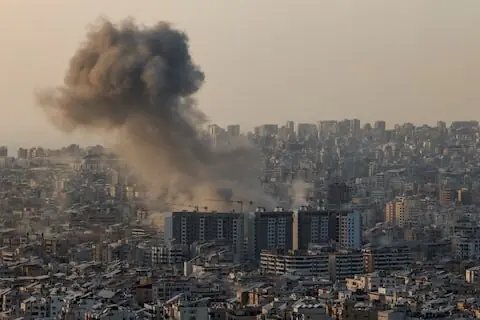
Israel launched a fresh wave of aerial bombardments against Hezbollah positions in Beirut early Saturday morning following a series of urgent evacuation orders. The military focused its operations on the southern suburbs of the Lebanese capital after warning residents in seven specific neighborhoods to flee immediately. While explosions echoed across the city throughout the night, there were no immediate reports regarding the number of casualties resulting from these specific strikes.
This latest escalation marks a significant intensification of the conflict as the air campaign enters its third consecutive week. The Israeli military has steadily expanded its list of targets in an effort to degrade the infrastructure of the Iran-backed militant group. Smoke plumes rose over the southern outskirts of the city as the sun began to come up over the Mediterranean. Residents who fled the area describe a scene of chaos and fear as families scrambled to find safety before the bombs fell.
The current hostilities represent the most violent phase of the regional spillover since Hezbollah began firing at Israel last March. That initial move was framed as an act of solidarity with Tehran, but it has since spiraled into a full-scale war that has devastated parts of Lebanon. Officials indicate that more than a thousand people have lost their lives since the violence intensified recently. The humanitarian toll is staggering, with over a million people forced to leave their homes in search of shelter.
Hospitals in Beirut and surrounding areas are struggling to keep up with the influx of patients and the general strain on the healthcare system. Many families are sleeping in public parks or temporary centers as the southern suburbs become increasingly uninhabitable due to the frequency of the strikes. The Lebanese government has called for international intervention to stop the displacement of its citizens. Despite these pleas, the military pressure continues to mount with no signs of a ceasefire on the horizon.
Looking forward, the regional dynamic remains incredibly volatile as both sides refuse to back down from the current confrontation. Diplomatic efforts to negotiate a pause in the fighting have so far failed to produce any tangible results for the people on the ground. Military analysts expect the strikes in Beirut to continue as long as the cross-border fire persists. For now, the focus remains on the humanitarian crisis unfolding as the displaced population grows by the day.
Comments (0)
No comments yet. Be the first to comment!
Leave a Comment