

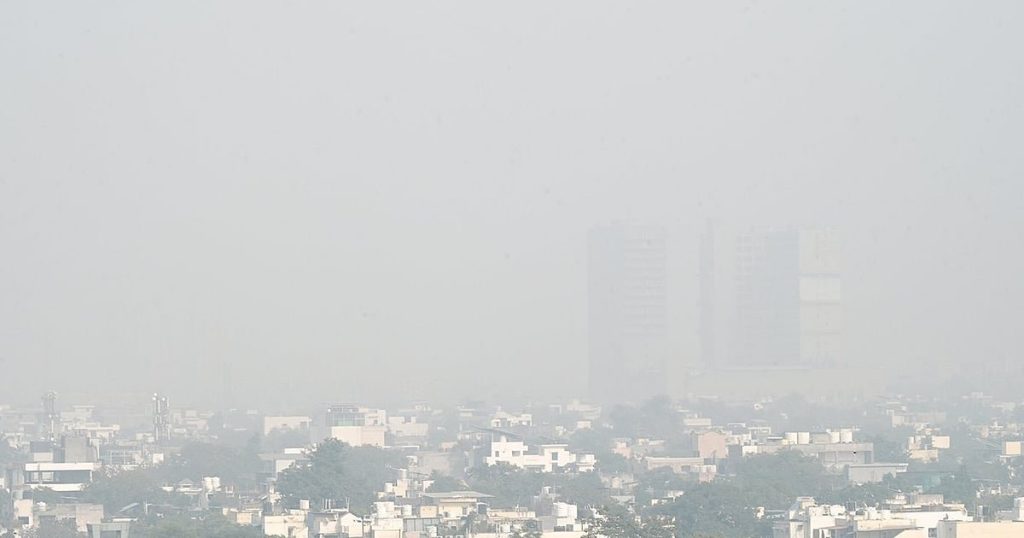
Residents of Delhi-NCR experienced an unexpected shift in weather this past Sunday, March 22, 2026, as dense fog blanketed parts of Noida and Haryana, impacting visibility. This sudden change comes after a period of unusually high temperatures starting in February, with recent unseasonal rain offering a welcome reprieve from the heat. The India Meteorological Department (IMD) has forecast more rain for the region in the coming days, surprising many who expected summer’s arrival.
The rain on Sunday brought significant relief from the rising temperatures, making the weather feel cooler than it has been in weeks. Delhi’s sky remained partly cloudy for most of the day, with temperatures hovering between 27 and 29 degrees Celsius, while the minimum temperature registered between 13 and 15 degrees Celsius. These lower temperatures are notably between 1.6 and 3.0 degrees below the seasonal average in many areas, adding to the unusual conditions.
Looking ahead, the IMD predicts further weather fluctuations across various parts of India. Himachal Pradesh and Uttarakhand are bracing for rain and snowfall expected on March 23, 2026. Meanwhile, states like Madhya Pradesh, Chhattisgarh, Bihar, and Jharkhand have been issued advisories for hailstorms on the same day, indicating a widespread disruption of typical weather patterns.
Specifically for Delhi-NCR, another round of rain is anticipated on March 23, 2026. The IMD suggests that cloudy skies will prevail, accompanied by light showers and thunderstorms. The maximum temperature is expected to climb slightly to between 30 and 32 degrees Celsius, with minimums ranging from 16 to 18 degrees Celsius, both remaining close to the usual averages for this time of year.
By Sunday evening, the skies over Delhi-NCR were fully overcast, setting the stage for the predicted precipitation. Monday’s forecast for Delhi indicates a maximum temperature between 29 and 31 degrees Celsius and a minimum temperature between 15 and 17 degrees Celsius, aligning once again with normal conditions. This series of weather events highlights the unpredictable nature of the current climate patterns affecting northern India.
Comments (0)
No comments yet. Be the first to comment!
Leave a Comment