

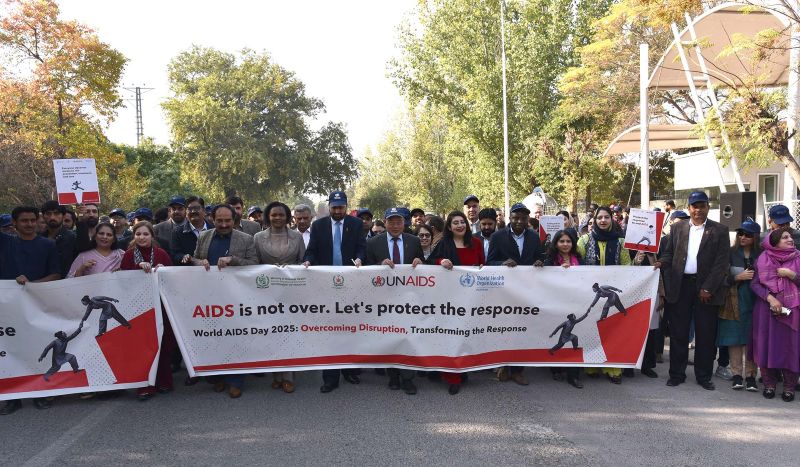
Rising HIV Cases Demand Urgent Action in Pakistan
Pakistan is facing a worrying increase in HIV infections, with international health agencies calling for immediate and coordinated action. The World Health Organization (WHO) and UNAIDS have jointly urged the government and stakeholders to strengthen prevention, testing, and treatment programs to curb the epidemic.
Recent reports highlight that new HIV cases are being detected at alarming rates, particularly among vulnerable populations such as injecting drug users, sex workers, and marginalized communities. Experts warn that without urgent intervention, the epidemic could spread further into the general population.
WHO and UNAIDS emphasized that early testing and timely treatment are critical to controlling HIV. Expanding access to antiretroviral therapy (ART) can significantly reduce transmission rates and improve the quality of life for those living with HIV.
The agencies also stressed the importance of awareness campaigns to combat stigma and misinformation. Many individuals avoid testing or treatment due to fear of discrimination, which worsens the crisis. Addressing these social barriers is seen as essential to improving public health outcomes.
Pakistan’s healthcare system faces challenges in scaling up HIV services, including limited resources, gaps in surveillance, and insufficient outreach programs. WHO and UNAIDS have called for stronger collaboration between government institutions, civil society, and international partners to ensure a comprehensive response.
The call to action includes:
- Expanding community-based testing and counseling services.
- Increasing availability of ART across all provinces.
- Strengthening data collection and surveillance systems.
- Promoting education and awareness campaigns to reduce stigma.
- Ensuring policy support and funding for long-term HIV control.
Health experts believe that with decisive action, Pakistan can reverse the trend and prevent HIV from becoming a larger public health emergency. The focus now lies on prevention, inclusivity, and sustained investment in healthcare infrastructure.
Comments (0)
No comments yet. Be the first to comment!
Leave a Comment