

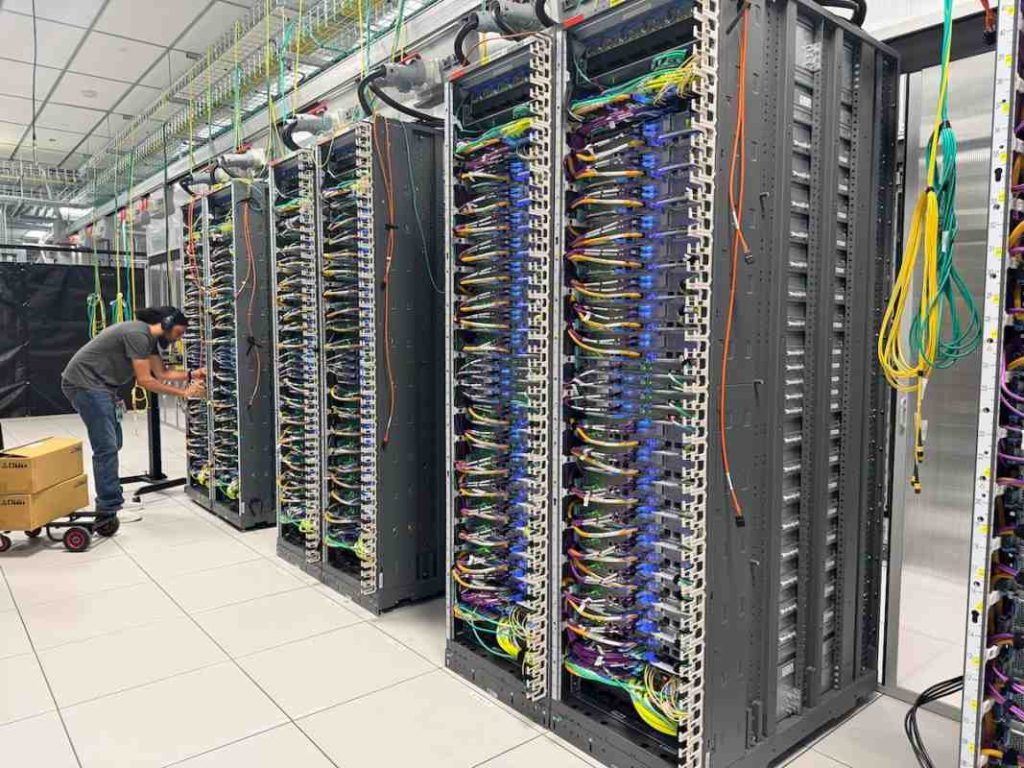
Amazon recently offered an exclusive look inside its Trainium chip development lab, a facility at the forefront of AI hardware innovation. This tour comes shortly after AWS announced a significant $50 billion investment deal with OpenAI. Industry observers are keenly watching the Trainium chip, developed in this lab, for its potential to offer more affordable AI inference and challenge Nvidia’s dominant position in the market. The visit provided insight into the technology driving these major AI partnerships.
During the tour, lab director Kristopher King and director of engineering Mark Carroll shared details about the Trainium chip’s capabilities. AWS has been a foundational cloud partner for Anthropic since its inception, a relationship that has persisted even as Anthropic expanded its cloud alliances. Amazon’s own AI services also rely heavily on Trainium chips, indicating strong internal demand for the hardware.
The recent agreement with OpenAI, which designates AWS as the exclusive provider for OpenAI’s new AI agent builder, Frontier, highlights the growing importance of this collaboration. If AI agents achieve the widespread adoption anticipated in Silicon Valley, this exclusive arrangement could become a critical component of OpenAI’s future business strategy. The scale of this partnership is underscored by AWS’s commitment to supply 2 gigawatts of Trainium computing power.
This substantial commitment to OpenAI comes at a time when both Anthropic and Amazon’s own Bedrock platform are already consuming Trainium chips at a pace that strains current production. Questions have also arisen regarding potential conflicts within OpenAI’s existing agreements, with reports suggesting Microsoft might view the Amazon deal as a breach of its own terms. The demand for these specialized AI chips is clearly exceeding Amazon’s current supply capabilities.
The development and large-scale deployment of custom AI silicon like Trainium represent a strategic move by cloud providers to gain a competitive edge. By controlling their own hardware, companies like Amazon can optimize performance and potentially lower costs for AI workloads. The success and widespread adoption of chips like Trainium could reshape the landscape of AI computing infrastructure.
Comments (0)
No comments yet. Be the first to comment!
Leave a Comment