

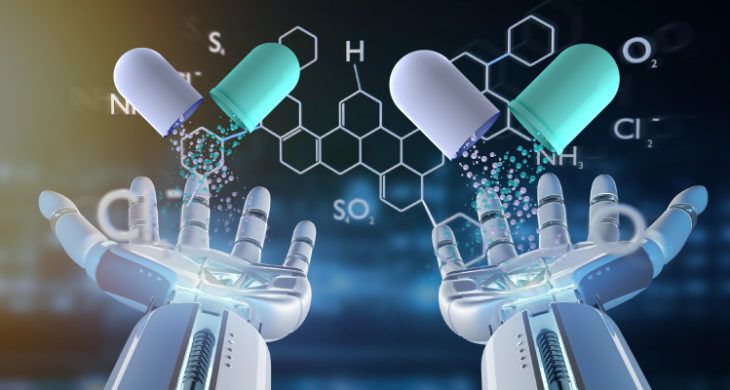
AI Is Redefining the Future of Research Labs
The design of research and development labs is undergoing a dramatic shift as artificial intelligence and automation become central to pharmaceutical innovation. For decades, labs were built around traditional workflows, but today’s science demands a new approach.
AI is not just a tool for data analysis — it’s reshaping how experiments are conducted, how teams collaborate, and how discoveries are accelerated. Automated systems now handle repetitive tasks, freeing scientists to focus on complex problem-solving and creative exploration. This shift is driving efficiency while reducing human error.
Modern labs are increasingly designed to integrate computational scientists and engineers alongside biologists and chemists. This interdisciplinary setup ensures that data-driven insights flow seamlessly into experimental design, creating a more agile and responsive research environment.
Collaboration is another key factor. AI-powered workflows encourage cross-disciplinary teamwork, breaking down silos that once slowed progress. Labs are being restructured to support both focused individual work and dynamic group interaction, reflecting the hybrid nature of modern science.
The impact of AI extends beyond efficiency. By enabling predictive modeling and advanced analytics, it allows researchers to anticipate outcomes, optimize experiments, and accelerate drug discovery. This capability is particularly valuable in pharma, where speed and accuracy can determine competitive advantage.
As organizations rethink their lab spaces, the emphasis is shifting toward flexibility. Labs must now accommodate evolving technologies, scalable automation, and diverse teams. The future of R&D is not just about physical infrastructure but about creating environments that foster innovation at every level.
In essence, AI is transforming the modern R&D lab into a hub of automation, collaboration, and discovery. Companies that embrace this evolution will be better positioned to lead in the next era of pharmaceutical breakthroughs.
Comments (0)
No comments yet. Be the first to comment!
Leave a Comment