

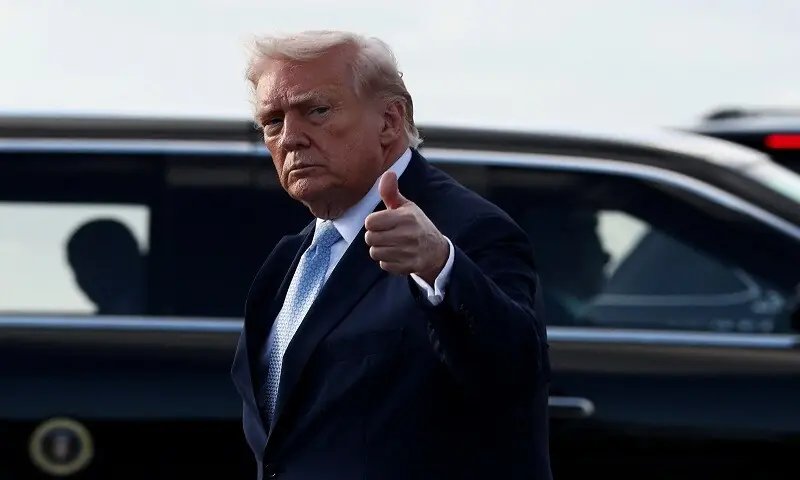
President Donald Trump announced on Friday that the United States is weighing a reduction in military operations against Iran after three weeks of intense regional conflict. While the president indicated that American forces are nearing their primary objectives, he explicitly dismissed the possibility of a formal ceasefire with the Islamic Republic. The shift in tone comes as the administration claims significant battlefield success, with Trump suggesting that the current military pressure has already achieved the desired results. This development marks a potential turning point in a war that has rapidly reshaped the geopolitical landscape of the Middle East since hostilities began in late February.
The reaction from Tehran remained defiant as Iran’s new supreme leader, Mojtaba Khamenei, addressed the nation on the first day of the Persian New Year. He claimed that Iranian forces had dealt a massive and dizzying blow to their enemies during the recent fighting, despite the heavy aerial bombardment from the United States and Israel. The conflict has seen Iran utilize ballistic missiles and drone swarms against various targets across the region in response to the initial strikes. This exchange of fire has created a volatile security environment that has drawn in multiple neighboring countries and disrupted major global shipping routes.
Global financial markets reacted sharply to the ongoing uncertainty, with Wall Street seeing significant losses as oil prices climbed. Investors remain deeply concerned that a prolonged disruption to energy supplies could trigger a broader economic downturn, especially with the Strait of Hormuz remaining a primary flashpoint. The S&P 500 dropped by 1.5 percent while international crude benchmarks rose past 112 dollars per barrel on Friday. President Trump suggested that other nations must now step up to police these vital waterways, stating that the United States would no longer take sole responsibility for guarding the transit of global oil and gas.
Regional tensions expanded further as Turkey criticized recent Israeli strikes on Syrian army positions, calling the move a dangerous escalation of the existing war. Although Syria has largely stayed out of the direct fighting until now, there are growing fears that the conflict could spill over into a much wider multi-front engagement. Meanwhile, Lebanon continues to suffer heavy casualties from airstrikes targeting Hezbollah positions, with local health officials reporting more than one thousand deaths. The humanitarian toll is mounting as the fighting continues to impact civilian infrastructure and urban centers throughout the Levant.
As the United States considers its next move, the path toward a permanent resolution remains unclear given the refusal to negotiate a truce. Trump maintained that the U.S. remains open to dialogue with Iranian leadership, but he expressed frustration over the lack of a clear counterpart to engage with in Tehran. For now, the focus shifts to whether the reduction in American strikes will lead to a de-escalation or if the regional powers will continue their high-stakes military standoff. The coming days will determine if the international community can successfully intervene to prevent the current regional friction from becoming a permanent state of war.
Comments (0)
No comments yet. Be the first to comment!
Leave a Comment