

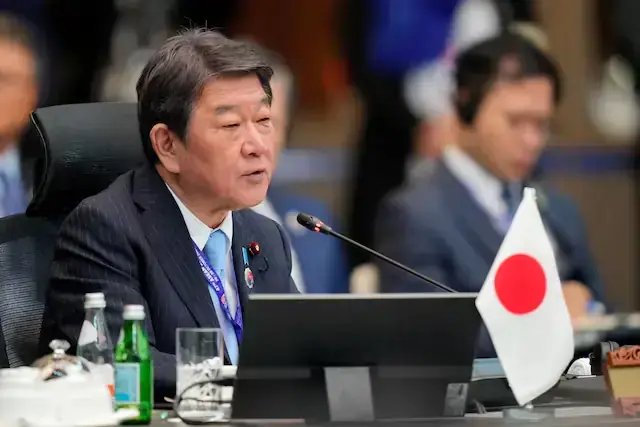
Japan’s Foreign Minister Toshimitsu Motegi suggested Sunday that Tokyo might consider deploying its Self-Defense Forces for minesweeping operations in the Strait of Hormuz. This potential action would be contingent on a complete ceasefire being established in the ongoing conflict involving the U.S. and Iran. Motegi emphasized that this remains a hypothetical scenario but highlighted the importance of the strait as a critical route for global oil shipments. The statement emerged during a Fuji TV program where the minister discussed international maritime security.
The Strait of Hormuz is a crucial chokepoint for approximately one-fifth of the world’s oil supply, making its stability vital for global energy markets. Japan, heavily reliant on oil imports, receives around 90% of its crude through this waterway. The minister’s comments come amid heightened tensions and disruptions to shipping in the region, which have already led to a surge in global oil prices and prompted some nations to release strategic reserves.
Under its post-war pacifist constitution, Japan faces significant legal limitations on military deployments abroad. However, security legislation enacted in 2015 provides a framework for deploying its Self-Defense Forces overseas under specific circumstances. These circumstances include situations where Japan’s survival is threatened by an attack on a close security partner, and no other viable solutions exist to address the threat.
Motegi clarified that Japan currently has no immediate plans to facilitate passage for its own stranded vessels through the strait. He stressed, however, the overarching necessity of ensuring safe navigation for all ships. The minister indicated that creating conditions conducive to unimpeded maritime traffic is a paramount concern for Japan and the international community.
Earlier this week, Iran’s Foreign Minister Abbas Araqchi reportedly discussed the possibility of allowing Japanese-related vessels passage through Hormuz with Motegi. This dialogue highlights ongoing diplomatic efforts to navigate the complex security landscape. The situation remains fluid, with the U.S. also urging allies to contribute naval assets to secure the strait, a request Japan has carefully considered within its legal constraints.
Comments (0)
No comments yet. Be the first to comment!
Leave a Comment