

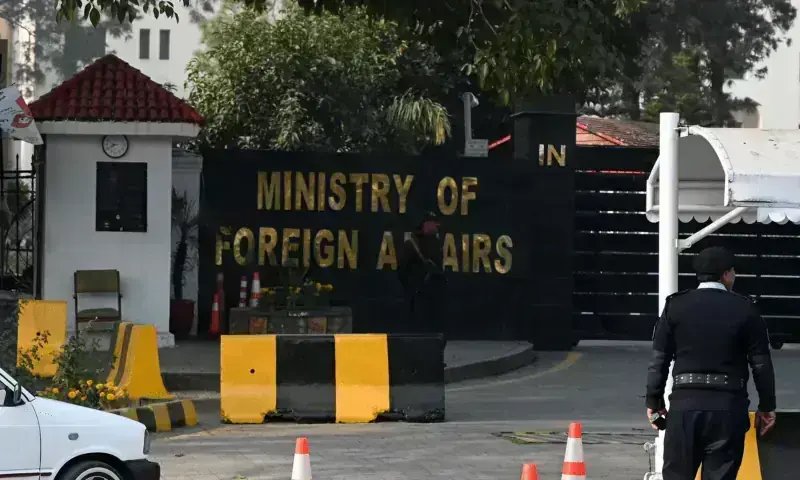
Pakistan officially dismissed Indian criticism regarding recent military strikes against militant infrastructure in Afghanistan on Wednesday. Foreign Office spokesperson Tahir Andrabi labeled the Indian remarks as deceptive and unjustified. The diplomatic clash followed Pakistani aerial operations targeting Kabul and Nangarhar provinces during Operation Ghazab lil-Haq. Pakistani officials stated the mission destroyed a former American military base currently used by militants. India previously termed these cross-border actions a significant risk to regional stability.
The dispute centers on Camp Phoenix which Pakistan identifies as a strategic hub for insurgent activity. Local Afghan sources claimed the bombardment hit a medical facility for drug recovery instead of a base. Pakistan maintains the facility housed an ammunition depot and supported hostile operations against its territory. The Foreign Office insists these measures remain necessary to neutralize groups launching attacks from across the border. Islamabad views these targeted strikes as a legitimate exercise of its security prerogatives.
Spokesperson Tahir Andrabi accused New Delhi of practicing hypocrisy while supporting terrorism from Afghan soil. He stated the Indian statement reflects duplicity from a nation that sponsors regional instability. Andrabi highlighted that India has historically acted as a spoiler regarding peace initiatives in the region. He also noted that Indian leadership remains unaccountable for internal human rights issues and Islamophobia. The spokesperson urged India to stop using neighboring territory to facilitate groups listed by the United Nations.
Islamabad further criticized India for undermining the sovereignty of several regional neighbors over many decades. The Foreign Office statement suggested that India violates international law and the UN Charter regularly. Officials pointed to the ongoing situation in Jammu and Kashmir as evidence of Indian double standards. They argued that New Delhi attempts to distract the world from its own domestic policies. Pakistan maintains that its counter-terrorism successes should not be subject to Indian complaints.
The current tension highlights a deepening rift between the nuclear-armed neighbors over the security vacuum in Afghanistan. Pakistan signals it will continue unilateral actions if threats persist near its shared borders. Observers expect increased diplomatic friction as both nations vie for influence within the shifting Afghan political landscape. Future stability depends on how the Taliban administration manages these competing regional interests. For now, Islamabad remains committed to dismantling any infrastructure that threatens its national integrity.
Comments (0)
No comments yet. Be the first to comment!
Leave a Comment