

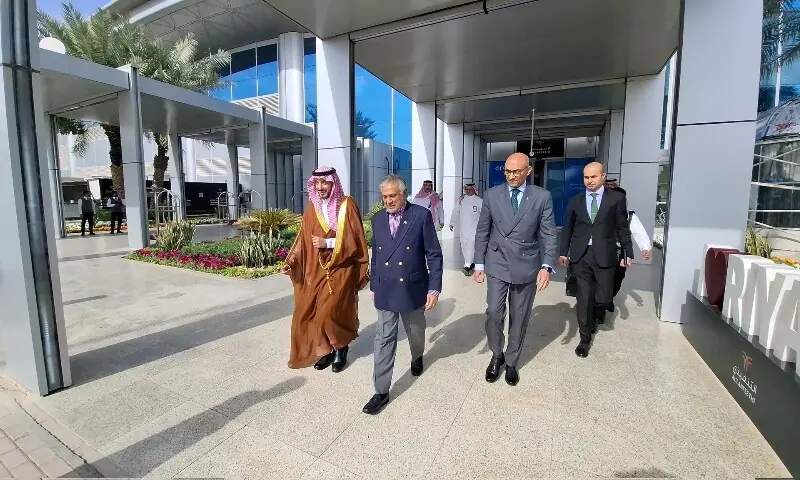
Pakistan Foreign Minister Ishaq Dar landed in Riyadh on Wednesday to join a high-level diplomatic summit focused on ending regional hostilities. He arrived in the Saudi capital at the invitation of Prince Faisal bin Farhan Al Saud to meet with various Arab and Islamic leaders. The meeting addresses the escalating violence that began following military strikes between the United States, Israel, and Iran in late February. Dar plans to advocate for an immediate ceasefire and the restoration of stability across the Middle East. Pakistan aims to serve as a diplomatic bridge between the conflicting nations during these critical discussions.
Ambassador Ahmed Farooq and Saudi officials greeted the Deputy Prime Minister upon his arrival for the two-day consultative session. Dar intends to voice strong support for the political independence and territorial integrity of all neighboring states during the summit. He will officially urge an end to all territorial attacks and military provocations currently threatening the region. The Foreign Office stated that Pakistan remains committed to protecting the sovereignty of its regional partners. This visit marks a significant step in Pakistan’s ongoing efforts to mediate the current security crisis through high-level engagement.
The Pakistani delegation will emphasize the importance of returning to formal dialogue and diplomatic negotiations to resolve the current impasse. Dar will highlight the country’s recent diplomatic outreach and its desire to play a central role in de-escalating the situation. He plans to reiterate Pakistan’s call for a swift conclusion to the ongoing armed conflict. Turkish Foreign Minister Hakan Fidan is also participating in the Riyadh meetings to discuss these urgent regional developments. The gathering brings together influential voices to find a collective solution to the violence affecting several Gulf nations.
This diplomatic mission follows several recent high-level interactions between Pakistani leaders and the Saudi government. Field Marshal Asim Munir previously met with the Saudi Defence Minister to discuss security concerns and recent aerial attacks. Prime Minister Shehbaz Sharif also held private talks with Crown Prince Mohammed bin Salman just days ago. During those meetings, Pakistan expressed total solidarity with Saudi Arabia during this period of heightened tension. These frequent visits underscore the deep strategic partnership and military cooperation between the two nations during times of regional instability.
The outcome of these talks in Riyadh could determine the future trajectory of peace efforts in the Middle East. Pakistan continues to position itself as a vital mediator capable of bringing different parties to the table. If the summit succeeds, it may lead to a formal framework for a lasting ceasefire and reduced military activity. International observers are watching closely to see if these diplomatic efforts can prevent a broader regional war. The success of this mission will likely define Pakistan’s future influence on the global diplomatic stage.
Comments (0)
No comments yet. Be the first to comment!
Leave a Comment