

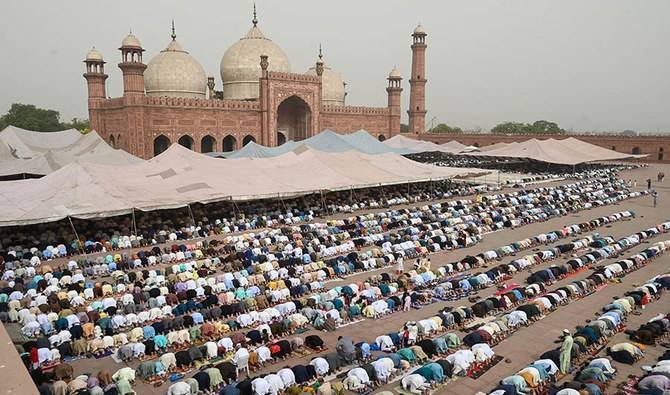
Pakistan is celebrating Eid ul-Fitr with nationwide enthusiasm, marking the end of Ramadan with prayer gatherings and communal greetings. Citizens across the country participated in special Eid prayers, with many leaders joining their constituents in local mosques and prayer grounds. This joyous occasion brings together families and communities to reflect and celebrate following a month of fasting and devotion, fostering a spirit of unity and gratitude.
Prominent political figures observed the Eid prayers in various cities, offering supplications for the nation’s peace, security, and stability. President Asif Ali Zardari attended prayers at Zardari House in Nawabshah, while Prime Minister Shehbaz Sharif performed his prayers in Lahore, engaging with local dignitaries and the public afterward. Defence Minister Khawaja Asif and Adviser Rana Sanaullah also participated in prayers in their respective hometowns of Sialkot and Faisalabad, emphasizing national well-being.
The celebrations extended across provinces, with leaders like Bilawal Bhutto Zardari in Larkana and Punjab Governor Sardar Salim Haider Khan in Dhurnal leading prayer congregations. Governor Haider Khan encouraged remembrance of the less fortunate during the festivities. In Karachi, despite some disruption from rain, Sindh Governor Nihal Hashmi offered his prayers at Governor House, while MQM-P leader Khalid Maqbool Siddiqui expressed hopes for effective governance.
Across Khyber Pakhtunkhwa, leaders like former Chief Minister Ali Amin Gandapur in Dera Ismail Khan and Chief Minister Mohammad Sohail Afridi in the Khyber District prayed for peace and unity. In Quetta, over a hundred prayer services were held, with Chief Minister Sarfraz Bugti joining citizens to pray for national prosperity. The Azad Jammu and Kashmir Prime Minister Faisal Mumtaz Rathore also addressed a gathering in Muzaffarabad, remembering those affected by conflicts.
As the nation celebrates Eid ul-Fitr, leaders exchanged warm greetings with the public following the prayer services. This widespread observance underscores the importance of the festival in Pakistan’s cultural and religious calendar. The day is marked by acts of kindness, family gatherings, and renewed commitments to communal harmony and national progress, embodying the spirit of Eid.
Comments (0)
No comments yet. Be the first to comment!
Leave a Comment