

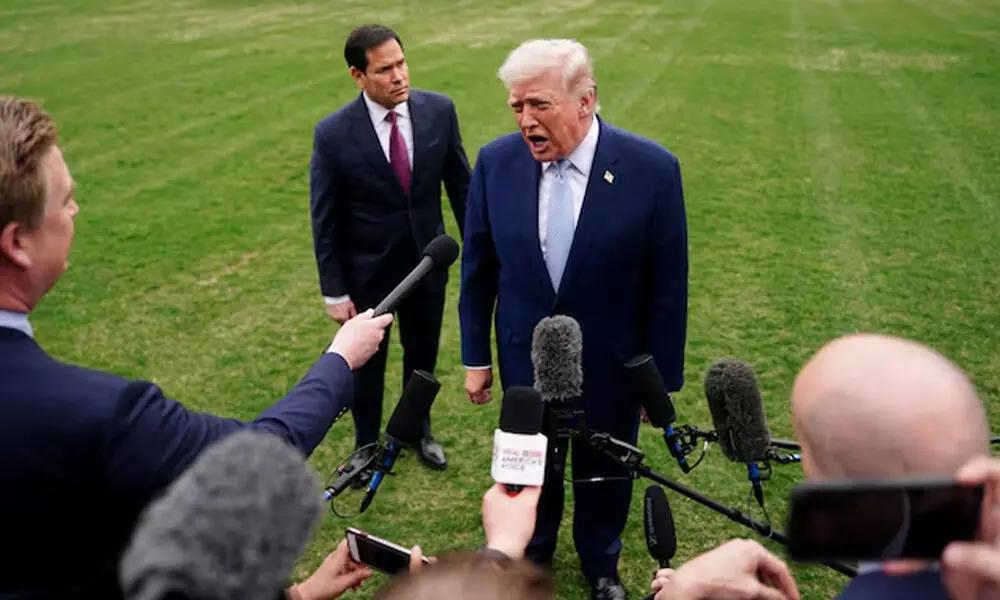
President Donald Trump indicated Friday that the United States is nearing the completion of its goals in the ongoing operations concerning Iran. He suggested a potential shift towards reducing military involvement and called upon nations reliant on the Strait of Hormuz to take primary responsibility for its security. Trump emphasized that American involvement in policing the vital waterway should become unnecessary once Iran’s perceived threat is eliminated.
In remarks shared on his Truth Social platform, Trump stated, “The Hormuz Strait will have to be guarded and policed, as necessary, by other Nations who use it — The United States does not!” This suggests a desire to transfer the burden of maritime security in the strategically important region. He further elaborated that while the U.S. would offer assistance if requested, the expectation is that other countries will step up.
The President’s comments signal a potential recalibration of American foreign policy and military posture in the Middle East. By expressing that U.S. objectives are nearly met, Trump implies a strategic victory or a sufficient deterrent has been achieved. This could pave the way for a reduction in troop presence or a decreased operational tempo in the region, depending on future developments.
Trump’s statement also highlighted a broader strategy of encouraging international cooperation and burden-sharing in global security matters. He seemed to be advocating for a system where nations that benefit most directly from international trade routes, like the Strait of Hormuz, should proactively safeguard them. This aligns with an ‘America First’ approach to foreign engagement, prioritizing national interests and reducing extensive overseas commitments.
The implications of this statement remain to be seen, particularly regarding how other nations will respond to the call for increased maritime security responsibilities. The effectiveness of such a strategy hinges on international buy-in and the actual reduction of threats emanating from Iran. Future actions will likely demonstrate whether this marks a genuine pivot in U.S. policy or a rhetorical shift.
Comments (0)
No comments yet. Be the first to comment!
Leave a Comment