

Rethinking Mental Health: Beyond Western Models in Pakistan
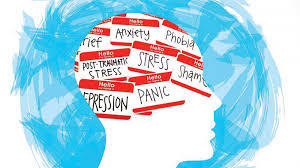
Mental health in Pakistan is increasingly under the spotlight, with rising concerns around depression, anxiety, substance use, and suicide among young people. While international frameworks have helped bring visibility to this neglected area, a deeper question remains: are we tackling the roots of distress or simply managing its symptoms?
China Mills, in her book Decolonising Global Mental Health, warns against the uncritical adoption of Western psychiatric models in the Global South. She argues that distress shaped by poverty, inequality, violence, and political oppression risks being reframed as individual pathology — a process she calls “psychiatrisation.”
This critique resonates strongly in Pakistan. A farmer in Sindh facing crop failure, a factory worker in Faisalabad struggling with unemployment, or a young woman in Karachi enduring domestic violence are not merely experiencing internal crises. Their suffering is rooted in structural realities such as poverty, gender inequality, displacement, and climate vulnerability.
Yet mental health responses often emphasize diagnosis and treatment at the individual level. Standardized tools like PHQ-9 and GAD-7, developed in Western contexts, measure symptoms but exclude social and economic drivers. A woman enduring domestic violence may be classified as “depressed,” but the tool offers no insight into the conditions fueling her distress. This risks medicalising social problems and shifting responsibility from institutions to individuals.
Pakistan lacks a national mental health policy, though the WHO recognizes social determinants such as poverty, unemployment, and violence. Its mhGAP programme has expanded access and reduced stigma, but its focus remains on individual and community-level interventions like counselling and stress management. These are valuable, yet they overlook deeper issues such as land rights, governance failures, and climate adaptation.
A decolonised approach would integrate mental health into broader development and rights frameworks. It would treat mhGAP as one component of a larger ecosystem that includes social protection, gender equality, labour rights, and climate resilience. Local research capturing how distress is understood in Pakistan would replace reliance on imported diagnostic models.
Ultimately, mental health in Pakistan must be seen not only as a clinical concern but as a reflection of societal conditions. Addressing distress requires more than helping people endure hardship — it demands challenging the structures that produce it.
Comments (0)
No comments yet. Be the first to comment!
Leave a Comment