

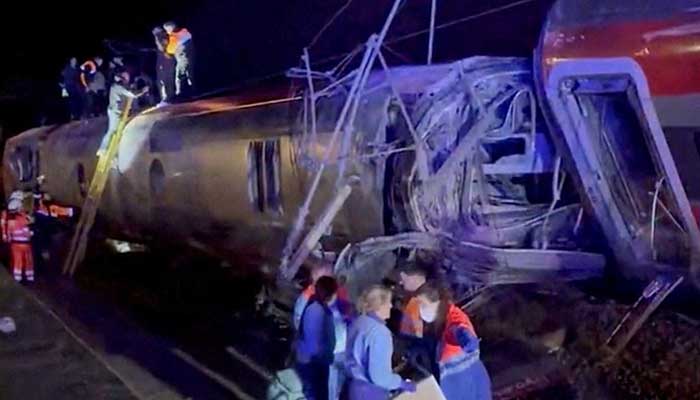
Spain Confronts Rail Safety Concerns After Deadly Train Derailment
Spain was shaken by tragedy as two high-speed trains derailed, leaving at least seven people dead and dozens injured. The incident occurred on Sunday, sparking a massive emergency response and raising urgent questions about the safety of the country’s rail network.
Witnesses reported scenes of chaos as carriages overturned and passengers scrambled to escape. Rescue teams rushed to the site, working tirelessly to free those trapped and provide medical assistance to the injured. Hospitals in nearby cities were placed on high alert to accommodate victims.
Authorities confirmed that investigations are underway to determine the cause of the derailment. Early reports suggest technical failure or track issues may have contributed, though officials have not ruled out other possibilities.
Spain’s high-speed rail system, known for its efficiency and modern infrastructure, has rarely seen accidents of this scale. The derailment has therefore intensified scrutiny on safety protocols, maintenance standards, and emergency preparedness.
Government leaders expressed condolences to the families of the victims and pledged a thorough inquiry. Transport officials emphasized that findings from the investigation will be used to strengthen safety measures and prevent future tragedies.
The derailment has reignited debate over rail safety across Europe, where high-speed networks are expanding rapidly. Experts argue that while such systems are generally safe, continuous investment in monitoring and maintenance is essential to avoid catastrophic failures.
For Spain, the incident marks one of the deadliest rail accidents in recent years, underscoring the need for vigilance as the country continues to rely heavily on its high-speed rail for domestic travel.
Comments (0)
No comments yet. Be the first to comment!
Leave a Comment