

Premier Stresses Need for Enhanced Water Storage Amidst Flood Crisis
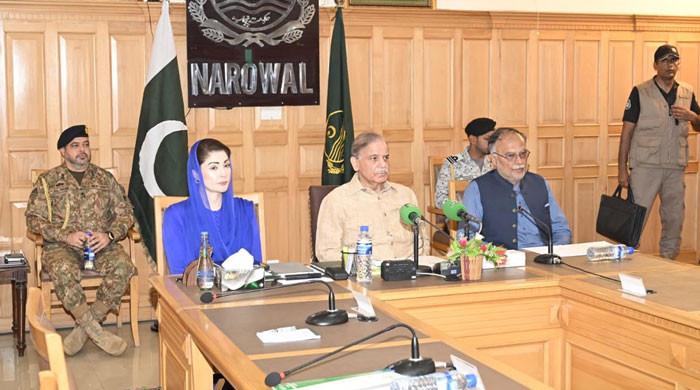
NAROWAL: Prime Minister Shehbaz Sharif emphasized the critical need to develop additional water storage facilities to mitigate the severe effects of flash floods and safeguard lives and livelihoods throughout the nation.
Pakistan is grappling with intense monsoon rains that have caused flash floods, swollen rivers, and overfilled dams, resulting in over 800 fatalities since late June. Compounding the situation, India discharged surplus water from its dams, leading to increased river flows in Punjab.
The National Disaster Management Authority (NDMA) reported that Pakistan evacuated more than 210,000 residents from areas near the Ravi, Sutlej, and Chenab rivers, which originate in India.
Earlier, government officials indicated that India had issued its third flood alert since Sunday, this time concerning the Sutlej River. The previous two alerts were related to water entering Pakistan via the Ravi River.
During a high-level meeting to assess the country’s flood situation, the prime minister underscored that expanding storage capacity was of utmost importance and urged immediate action. “Increased storage is essential, and we must commence work on this without delay,” he stated.
PM Shehbaz emphasized the necessity of generating funds to support the construction of dams and reservoirs across the country, remarking, “We will need to mobilize the resources ourselves.”
He also advocated for the swift completion of ongoing projects, including the Diamir Bhasha Dam, to provide protection against future disasters.
The prime minister pointed out that while the floods initially impacted the northern regions, they are now causing widespread destruction in Punjab’s plains. He expressed his condolences for those who lost their lives due to the floods and heavy rains.
He commended the collaborative efforts of Punjab Chief Minister Maryam Nawaz, the NDMA, the Pakistan Army, and other relevant government bodies for their dedicated work during rescue and relief operations.
“This collaborative spirit between the Punjab government and related departments has been instrumental in minimizing losses,” he added.
Referencing the floods of 2022, which predominantly affected Sindh and Balochistan, PM Shehbaz cautioned that Pakistan remains among the top ten countries most vulnerable to climate change, making similar disasters likely in the years ahead.
He appealed to all departments to enhance their preparedness and implement short-, medium-, and long-term strategies to address future challenges through informed decision-making.
During the meeting, CM Maryam conveyed her deep sorrow over the loss of life and damage to crops and infrastructure resulting from the floods. She affirmed that no fatalities were attributable to negligence or inadequate coordination.
The chief minister lauded the NDMA, PDMA, police, civil defense, and the Pakistan Army for rescuing over 50,000 individuals and effectively conducting timely evacuations through a reliable early warning system. She also highlighted that minimal livestock losses were achieved due to prompt rescue operations.
With parts of the Gurdwara significantly flooded, the chief minister instructed authorities to expedite the drainage of water.
She mentioned that she had also instructed the activation of field hospitals and the deployment of 1,000 mobile clinics to flood-affected areas.
The chief minister also mandated ensuring an adequate supply of vaccines and prioritizing vulnerable groups, such as women, children, and the elderly, in rescue efforts.
She also emphasized that approximately 200km of roads had been damaged and directed the immediate restoration of temporary routes to maintain connectivity.
She reiterated the need for infrastructure to store maximum water and decrease wastage, underscoring long-term recovery plans.
Earlier, Chairman NDMA Lt Gen Inam Haider provided a comprehensive briefing on the overall flood situation in Punjab.
Comments (0)
No comments yet. Be the first to comment!
Leave a Comment