

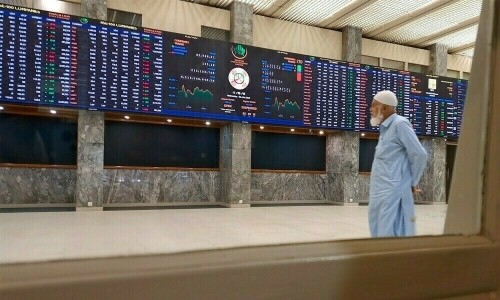
PSX Faces Selling Pressure, KSE-100 Index Declines
After a slight increase in the early hours of trading on Thursday, the Pakistan Stock Exchange (PSX) encountered selling pressure, resulting in the benchmark KSE-100 Index dropping by more than 700 points during the day’s trading session.
As of 3:30pm, the benchmark index was recorded at 122,046.46, reflecting a decrease of 715.18 points, equivalent to a 0.58% decline.
On the preceding day, Wednesday, the PSX experienced varied trading as investor sentiment improved due to reduced tensions in the Middle East. The key indices showed gains for the second consecutive day, with healthy market activity.
The KSE-100 Index increased by 515 points, or 0.42%, to close at 122,761.64 points.
Global Market Overview
In international markets, Asian stocks experienced a period of sluggishness on Thursday. Oil prices stabilized, and the euro remained near a 3-1/2-year high. Investors were evaluating geopolitical, economic, and fiscal uncertainties as they prepared for the US President’s tariff deadline.
Market sentiment has been positively influenced by a ceasefire between Israel and Iran, which appears to be holding, thereby diminishing potential disruptions to global oil trade and supporting overall confidence.
MSCI’s index of Asia-Pacific shares excluding Japan showed minimal change in early trading, following a pause in Wall Street’s overnight rally. Tokyo’s Nikkei index increased by 0.9%, reaching a four-month peak.
The selling of the US dollar intensified following a report that the President has considered selecting and announcing a replacement for Federal Reserve Chair Jerome Powell by September or October, potentially undermining his position.
This development propelled the euro to its highest level since November 2021, last trading at $1.6805. The Swiss franc reached a decade-high, while the Japanese yen strengthened by 0.35% to 144.70 per dollar.
The President has frequently criticized Powell for not lowering interest rates and has contemplated either dismissing him or appointing a successor soon, which has weakened investor confidence in U.S. assets and challenged the central bank’s autonomy.
This information reflects an intra-day market update.
Comments (0)
No comments yet. Be the first to comment!
Leave a Comment