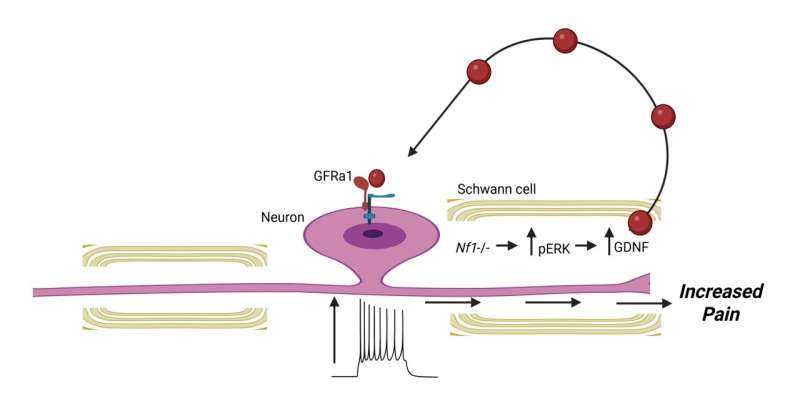
Researchers at Cincinnati Children's have made a significant discovery that could lead to a new approach in relieving chronic pain associated with neurofibromatosis type 1 (NF1), a genetic disorder characterized by the growth of tumors along nerves. The study's findings suggest that pain in NF1 may not be solely a result of tumor growth, but rather a more complex process that involves abnormal signaling from Schwann cells, which play a crucial role in supporting and protecting nerves.
The researchers found that abnormal signaling from Schwann cells produces excess glial cell line–derived neurotrophic factor (GDNF), a protein that can amplify pain signaling. This discovery is important because it implies that pain in NF1 may begin before tumors appear, and that targeting the underlying causes of this pain could lead to more effective treatments. By understanding the role of Schwann cells in NF1-related pain, researchers may be able to develop new therapies that address the root causes of this debilitating symptom.
The study's results have significant implications for the treatment of NF1-related pain, which is often a major challenge for patients with this condition. Current treatments for NF1-related pain are often limited and may not provide adequate relief, highlighting the need for new and more effective approaches. By identifying the potential role of Schwann cells in NF1-related pain, researchers may be able to develop new therapies that target these cells and the abnormal signaling pathways they produce.
The discovery of the potential link between Schwann cells and NF1-related pain is a promising step forward in the search for more effective treatments for this condition. As researchers continue to explore the underlying causes of NF1-related pain, they may uncover new opportunities for intervention and treatment, ultimately improving the lives of patients with this genetic disorder. By shedding light on the complex mechanisms that contribute to NF1-related pain, this study brings hope for the development of more targeted and effective therapies that can provide relief to those affected by this condition.