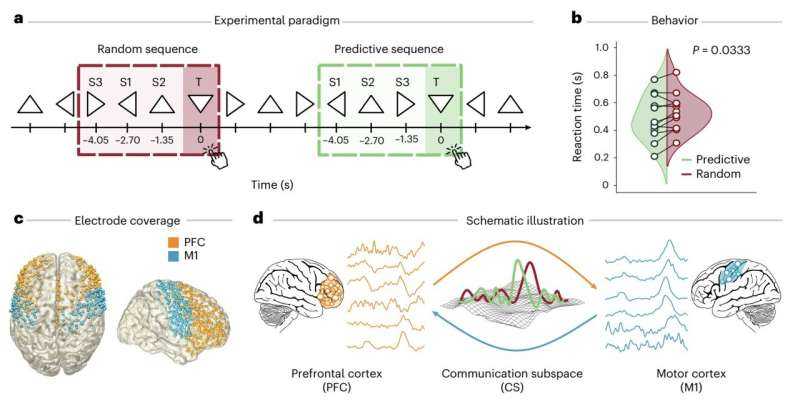
The human brain's ability to adapt to changing environments is a complex process that has been the subject of numerous neuroscience studies. At the core of this adaptation process lies the brain's capacity to translate abstract goals or rules into specific physical actions or behaviors. This process is crucial for humans to navigate their surroundings effectively and respond to various stimuli.
The neural underpinnings of this process, however, have not yet been fully understood. Researchers have long been seeking to elucidate the mechanisms by which the brain achieves this translation, and recent studies have shed some light on the matter. It appears that a distinct communication subspace in the brain plays a key role in turning goals into actions.
This communication subspace is thought to be responsible for facilitating the exchange of information between different brain regions, enabling the brain to integrate abstract goals with specific physical actions. By examining the neural activity patterns within this subspace, researchers hope to gain a deeper understanding of how the brain achieves this complex process.
Further research into the neural underpinnings of this process is necessary to fully elucidate the mechanisms by which the brain translates goals into actions. As scientists continue to explore the brain's communication subspace, they may uncover new insights into the neural basis of human behavior and cognition. This knowledge could have significant implications for the development of new treatments for neurological disorders and could potentially lead to the creation of more sophisticated artificial intelligence systems.
The study of the brain's communication subspace and its role in translating goals into actions is an exciting and rapidly evolving field of research. As new discoveries are made, scientists are gaining a deeper understanding of the complex processes that underlie human behavior and cognition. This knowledge has the potential to revolutionize our understanding of the human brain and could lead to significant advances in fields such as neuroscience, psychology, and artificial intelligence.