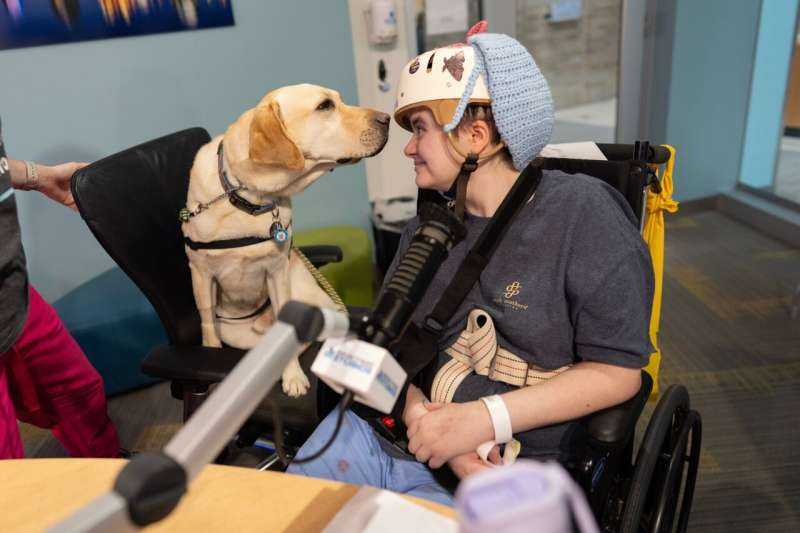
The use of therapy dogs in children's hospitals is becoming increasingly popular, and for good reason. These furry caregivers have been shown to have a profound impact on the healing process, providing comfort and emotional support to young patients during difficult times. A heartwarming example of this can be seen in the story of 5-year-old Calvin Owens, who had been confined to a hospital bed for over a month.
Calvin's life changed for the better when he met Hadley, a therapy dog who visited him on the hospital patio. Despite being connected to various equipment with wires and tubes, Calvin was able to stand up near his wheelchair and engage with Hadley, even managing to toss her a ball. This simple act of interaction brought a sense of joy and normalcy to Calvin's life, and it's a testament to the power of animal-assisted therapy.
Therapy dogs like Hadley are specially trained to provide affection and comfort to patients, and they have been shown to have a range of benefits, from reducing stress and anxiety to promoting social interaction and physical activity. In the case of children's hospitals, these benefits are especially important, as young patients often face unique challenges and stresses during their recovery. By providing a sense of comfort and companionship, therapy dogs can help kids feel more at ease, and can even help to reduce their pain and discomfort.
The use of therapy dogs in children's hospitals is not only beneficial for patients, but also for their families. Parents and caregivers often experience high levels of stress and anxiety when their child is in the hospital, and interacting with a therapy dog can provide a much-needed break and a sense of calm. As the use of therapy dogs in children's hospitals continues to grow, it's clear that these furry caregivers are making a real difference in the lives of patients and their families, and are an invaluable part of the healing process.